Last November, Georgetown University psychology professor (and self-proclaimed "Oxfreudian") Richard Waugaman released a Kindle-only ebook that I think hasn't been given enough recognition. It's called Newly Discovered Works by "William Shake-Speare" a.k.a. Edward de Vere, Earl of Oxford.
(In recognition of Oxford's birthday, Prof. Waugaman is offering this ebook free of charge on April 12, 2015.)
As the title promises, Waugaman makes compelling (if not necessarily, by his own admission, conclusive) arguments for attributing five anonymous poems from the 1570s, '80s and '90s -- as well as a landmark work of literary criticism, The Arte of English Poesie (1589) -- to Edward de Vere, Earl of Oxford.
And there is one work in Waugaman's thought-provoking collection in particular that I want to mention here. Since reading his short ebook last year, this is the poem that sticks with me most. It's called "A Letter written by a yonge gentilwoman and sent to her husband unawares (by a freend of hers) into Italy." (The link here is to the entire poem on Google Books.)
It's an anonymous 96-line poem published in 1578 that is written, as advertised, in the voice of a woman pining for her husband as he travels in Italy.
Of course, Edward de Vere gained great renown at court in the 1570s for his 1575-'76 Italian tour and the disastrous aftershocks from his tumultuous return when he accused his wife, Anne Cecil, of cuckolding him while he traveled abroad. (She did give birth while he was out of the country, and the he-said-she-said arguments that ensued upon his return were tempestuous and epic. And, in a sense, they're still being rehashed on stages around the world to this day.)
Here's why Waugaman's find matters: If it were indeed Oxford writing these words,
it'd be one of the more "Shakespearean" poems in his canon of early
verse. For here is a poem that could be a kind of early draft of a
speech from one of the many Anne Cecil-inspired heroines in the canon:
Helena and Hermia come to mind in particular here. The former for her
contending with a lover who has run off to Italy. The latter for a
pathetic appeal she makes to her man citing the baby they have (she
says) in common. Or in the words of "A Letter"
"And last of all, which grieves me most, that I was so beguiled
Remember most, forgetful man!, thy pretty tattling child." (ll. 37-38)
The Stratfordian myth we're now told about Oxford, exemplified in Alan Nelson's Monstrous Adversary, is
that Edward de Vere saw the world through an
"egocentric, cry-baby attitude" that Nelson (p. 161) memorably describes
as being emblematic of Oxford's poetic style. Oxford was allegedly too self-absorbed, in other words, to have written in anyone's voice but his own.
But this poem would give the lie to such a claim. If Waugaman's attribution is correct, it's Oxford in his full youthful voice -- bold, unabashed and arrogant. But then channeling that through the voice of a self-effacing and modest gentlewoman who might be an understudy for a number of early Shakespearean heroines. (No fierce Portia or assured Isabella to be found here, admittedly, but a peer perhaps of the more meek-seeming, early Anne Cecil-inspired characters like Anne Page, Hero or Adriana/Luciana.)
The poem, indeed, purports to tell the
story of a woman exactly in Anne Cecil's situation in 1578, when it was
published. For this reason, Waugaman quotes the Stratfordian critic
Steven May (an expert on Elizabethan courtly verse and editor of an
edition of Oxford's attributed youthful poems) noting that the "poem's
speaker seems to be in exactly the state of Anne De Vere during her
husband's sojourn" in Italy.
And, it should be noted, the author of this anonymous verse also gets a dig in at the Cecils, with the sarcastic line about a "rich and wealthy dower." As "Shakespeare" by Another Name was first to point out, witness a previously unnoticed letter from a Spanish source, William Cecil appears to have dangled a staggering £15,000 dowry in front of Oxford as inducement to marry his daughter Anne. But, so far as I've been able to trace at least, Cecil never paid it out. Yet Cecil appears, again if the Spanish source is correct, to have made arrangements to pay the dowry with Spanish gold behind Spanish enemy lines in the Lowlands. (!) Which I think is why Oxford ran off to the Lowlands as he did in 1574.
In any event, Steven May does not go along with Waugaman in attributing the poem to Oxford. Though May is hardly the final authority on the matter either. Readers already familiar with the inventive, strongly rhythmic, metaphor-laced (often high-born metaphor-laced) voice of the early "Shakespeare" style should pay close attention.
I think Waugaman has a ringer here. Usage, spelling and other stylometric tests might constitute a strong followup attribution study of this poem. I'd be curious to know what readers would add to Waugaman's and this blog's initial reactions to the poem. Please contribute to the discussion in the comments section below.
So, until a more complete attribution study is done on this poem, I'd definitely put "A Letter Written by a Young Gentlewoman" in the keep-an-eye-on-this-space category.
Please, in any case, buy Waugaman's ebook. (Or, on Apr. 12, 2015, download it for free.) It's worth the small price of entry. And, to add to the discussion of its merits, I've posted a modern-English version of the poem below. (Please also post a comment below or send an email if you discover any transcription or translation errors.)
+-----------------+
A Letter Written By A Young Gentlewoman and Sent to Her Husband Unawares (By A Friend of Hers) Into Italy
Imagine when these blurred lines, thus scribbled out of frame,
Shall come before thy careless eyes, for thee to read the same:
To be through no default of pen, or else through proud disdain,
But only through surpassing grief which did the author pain.
Whose quivering hand could have no stay, this careful bill to write
Through flushing tears distilling fast, whilst she did it indict:
Which tears perhaps may have some force (if thou no tiger be),
And mollify thy stony heart, to have remorse on me.
Ah, perjured wight reclaim thyself, and save thy loving mate,
Whom thou hast left beclogged now, in most unhappy state:
(Ay me poor wench) what luckless star? What frowning god above?
What hellish hag, what furious fate hath changed our former love?
Are we debarred our wonted joys? Shall we no more embrace?
Wilt thou my dear in country strange ensue Aeneas' race?
Italians send my lover home, he is no German born,
Unless ye welcome him because he leaves me thus forlorn.
As erst ye did Anchises' sonne, the founder of your soil,
Who falsely fled from Carthage Queen, reliever of his toil.
Oh send him to Britannia['s] coasts unto his trusty feere,
That she may view his comely corpse, whom she esteems so dear.
Where we may once again renew our late surpassed days,
Which then were spent with kisses sweet and other wanton plays.
But all in vain (forgive thy thrall, if she do judge awrong),
Thou canst not want of dainty trulles Italian dames among.
This only now I speak by guess, but if it happen true,
Suppose that thou hast seen the sword, that me thy lover slew.
Perchance through time so merrily with dallying damsels spent,
Thou standst in doubt and wilt inquire from whom these lines were sent.
If so, remember first of all, if thou hast any spouse.
Remember when, to whom and why, thou erst hast plighted vows,
Remember who esteems thee best, and who bewails thy flight,
Mind her to whom for loyalty thou falsehood dost requite.
Remember Heaven, forget not Hell, and weigh thine own estate,
Revoke to mind whom thou hast left, in shameful blame and hate:
Yea mind her well who did submit, into thine only pow'r
Both heart and life, and therewithall, a rich and wealthy dower.
And last of all which grieves me most, that I was so beguiled
Remember, most forgetful man, thy pretty tattling child.
The least of these surnamed things, I hope may well suffice
To shew to thee the wretched dame that did this bill devise.
I speak in vain, thou hast thy will, and now saith Aeson's son,
Medea may pack up her pipes, the golden Fleece is won.
If so, be sure, Medea, I will show forth my self in deed,
Yet gods defend, though death I taste, I should destroy thy seed.
Again, if that I should inquire, wherefore thou dost sojourn,
No answer fitly mayst thou make, I know, to serve thy turn.
Thou canst not cloak (through want) thy flight, since riches did abound:
Thou needs not shame of me thy spouse, whose birth not low is found,
As for my beauty, thou thy self, erstwhile didst it commend,
And to conclude I know no thing, wherein I did offend.
Retire with speed, I long to see, thy bark in wished bay,
The seas are calmer to return, then earst to fly away.
Behold the gentle winds do serve, so that a friendly gale,
Would soon convey to happy port, thy most desired sail.
Return would make amends for all, and banish former wrong,
Oh that I had, for to entice, a Siren's flattering song:
But out alas, I have no shift or cunning to entreat.
It may suffice in absence thine, that I my griefs repeat.
Demand not how I did digest, at first thy sudden flight,
For ten days space I took no rest, by day nor yet by night.
But like to Bacchus' beldame none, I sent and ranged apace,
To see if that I mought thee find, in some frequented place.
Now here, now there, now up, now down, my fancy so was fed,
Until at length I knew of troth, that thou from me wert fled:
Then was I fully bent with blade, to stab my vexed heart,
Yet hope that thou wouldst come again, my purpose did convart:
And so ere since I liv'd in hope bemixed with dreadful fear,
My smeared face through endless tears, unpleasant doth appear.
My sleeps unsound with ugly dreams, my meats are vain of taste
My gorgeous raiment is despised, my tresses rudely placed
And to be brief I boldly speak, there doth remain no care:
But that thereof in amplest wise, I do possess a share:
Like as the tender sprig doth bend, with every blast of wind,
Or as the guideless ship on seas, no certain port may find.
So I now subject unto hope, now thrall to careful dread,
Amidst the rocks, tween hope and fear, as fancy moves, am led.
Alas return, my dear, return, return and take thy rest,
God grant my words may have the force, to penetrate thy breast.
What dost thou think in Italy, some great exploit to win?
No, no, it is not Italy, as sometimes it hath been.
Or dost thou love to gad abroad, the foreign coasts to view
If so, thou hadst not done amiss, to bid me first adieu:
But what hath been the cause, I need not descant long,
For sure I am, meanwhile poor wench, I only suffer wrong.
Well thus I leave, yet more could say: but least thou shouldst refuse,
Through tediousness to read my lines, the rest I will excuse:
Until such time as mighty Jove doth send such lucky grace,
As we thereof in friendly wise, may reason face to face.
Till then farewell, and he thee keep, who only knows my smart
And with this bill I send to thee, a trusty lover's heart.
Thy mate, though late, doth write, her light,
Thou well, canst tell, her name.
[Adapted with permission from Richard M. Waugaman M.D., Newly Discovered Works by "William Shake-Speare": a.k.a. Edward de Vere, Earl of Oxford. (2014) Oxfreudian Press. Kindle Edition; image: Henrietta Rae, Mariana]
Showing posts with label Italy. Show all posts
Sunday, April 12, 2015
Saturday, December 10, 2011
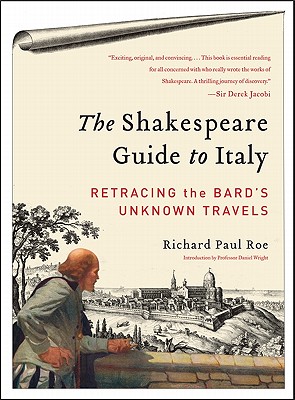
Guest post: How Did A Man Who Didn't Go to Italy Go to Italy? A review of Richard Paul Roe's The Shakespeare Guide to Italy
Book review of Richard Paul Roe, The Shakespeare Guide to Italy: Retracing the Bard's Unknown Travels (Harper Perennial, Nov. 2011)
by John Christian Plummer
Imagine that you lived in a time in which every educated person was absolutely certain that the planets Mars, Jupiter and Saturn moved both forward and backward. This is what the astronomer Tycho Brahe called “retrograde motion.” In Hamlet, when Claudius tells Prince Hamlet that a return to Wittenberg (the alma mater of Brahe) “is most retrograde to (the King’s) desire.”
From the standpoint of the 21st century, it requires a powerful feat of imagination to reckon that a vast celestial body like Mars would stop in the middle of space and reverse its direction. And that it would do so consistently. But that is precisely what many well educated 16th century Europeans thought happened, and they didn’t just make this up out of a desire for imaginative tales; they had a problem that needed explaining. The problem was Mars appeared at one point in the east of the sky, progressed westward, but then appeared back east of its westward position. If Mars were to move in that way as it orbited the earth…well…one logical explanation would suggest it wasn’t orbiting the earth. But that was impossible, of course, because Mars, Jupiter, Saturn and all the other planets, as well as the sun, absolutely did orbit the earth, because the earth, as everyone knew, was the center of the universe. So given that unassailable fact, Brahe proposed his theory of retrograde motion. Mars, like a crab, like Hamlet, moved backward.
From where we sit in the age of Einstein, it’s easy to chuckle at this absurd mental contortion which, we now know, flies in the face of not only the correct, heliocentric model of the solar system, but also basic Newtonian physics. But let us not forget that the educated Europeans of the 16th century were operating from a working hypothesis – the geocentric model of the universe – that was powerful enough to put mortal fears into the minds of men like Copernicus and Galileo, whose more elegant, thoroughly researched and ultimately accurate explanations eventually won the day.
It is no hyperbole to call Richard Paul Roe a twenty-first century Galileo of literature. Roe isn’t examining the stars without, but rather the stars within: specifically a third of the canon of the man some call the greatest author who ever set pen to paper, the man we call William Shakespeare. The so-called Italy plays of Shakespeare are the subject of Roe’s tremendous inquiry, and his more than two decades of painstaking investigation and research have resulted in the landmark book, The Shakespeare Guide to Italy, Retracing the Bard’s Unknown Travels, just released, posthumously, under the Harper/Perennial imprint.
Friday, December 03, 2010
Remembering Richard Paul Roe
This morning I learned of the passing of Richard Paul Roe, a key expert on an important and underappreciated topic in Shakespeare scholarship: Shakespeare's Italy. Roe is pictured here in an interview I did with him in 2002 at (as it was then titled) the Edward de Vere Studies Conference at Concordia University in Portland, Ore.
Practically for as long as I've known about the authorship issue (dating back to 1993) I've heard reports about Roe's treasure chest of new evidence on the Bard's Italian knowledge. Roe, one soon learned, had been gathering this wealth of new research over many years of travel to and research in Italy.
Roe's fundamental point was that, contrary to the ignorant-old-Will Stratfordian dogma, the author of the "Shakespeare" canon knew the Italian and French settings in his works exceptionally well. The "Shakespeare" Italy plays in particular, Roe argues, display a kind of organic and intimate knowledge that only comes from first hand experience.
I've seen Richard give talks, and I've had the great privilege to interview and correspond with him. He was very kind to provide a few important and unpublished findings for "Shakespeare" By Another Name.
I'm very sorry to have to report the news of his death today.
One small solace is that Roe lived to collect, write and supervise the preparation of a tremendous book containing all of his findings. This magnum opus, The Shakespeare Guide to Italy: Then and Now, will be published next year by HarperCollins.
The Oberon Blog today reports a conversation they had with a publicist at HarperCollins, who announced a Nov. 1, 2011 publication date for Roe's book. I have an advance copy of the book and will only reiterate what I said earlier this year: It's a superb piece of work.
As the publication date approaches, I'll be posting a full review.
Meantime, I extend my condolences and sympathy to the loved ones he leaves behind.
Roe's work will be long admired and appreciated. There has been, I think, no greater collection of Shakespearean scholarship in recent years. And that, in the words of the Sonnets' dedication, is surely a fine and fitting kind of "eternity promised by our ever-living poet."
Practically for as long as I've known about the authorship issue (dating back to 1993) I've heard reports about Roe's treasure chest of new evidence on the Bard's Italian knowledge. Roe, one soon learned, had been gathering this wealth of new research over many years of travel to and research in Italy.
Roe's fundamental point was that, contrary to the ignorant-old-Will Stratfordian dogma, the author of the "Shakespeare" canon knew the Italian and French settings in his works exceptionally well. The "Shakespeare" Italy plays in particular, Roe argues, display a kind of organic and intimate knowledge that only comes from first hand experience.
I've seen Richard give talks, and I've had the great privilege to interview and correspond with him. He was very kind to provide a few important and unpublished findings for "Shakespeare" By Another Name.
I'm very sorry to have to report the news of his death today.
One small solace is that Roe lived to collect, write and supervise the preparation of a tremendous book containing all of his findings. This magnum opus, The Shakespeare Guide to Italy: Then and Now, will be published next year by HarperCollins.
The Oberon Blog today reports a conversation they had with a publicist at HarperCollins, who announced a Nov. 1, 2011 publication date for Roe's book. I have an advance copy of the book and will only reiterate what I said earlier this year: It's a superb piece of work.
As the publication date approaches, I'll be posting a full review.
Meantime, I extend my condolences and sympathy to the loved ones he leaves behind.
Roe's work will be long admired and appreciated. There has been, I think, no greater collection of Shakespearean scholarship in recent years. And that, in the words of the Sonnets' dedication, is surely a fine and fitting kind of "eternity promised by our ever-living poet."
Labels:
Italy,
Shakespeare,
Shakespeare authorship
Saturday, October 23, 2010
The Bard of Venice (VIDEO)
On September 23, 2011, Sony Pictures will be releasing a big-budget popcorn movie called Anonymous. As blogged on this page, the movie tells the tale of Edward de Vere as "Shakespeare" -- parts of which will be highly fictionalized, of course.
And so for the first time in history, a broad cross-section of the moviegoing public will be open to hearing out the factual story of Edward de Vere's epic life. And already primed for the many connections between his life and the Shakespeare plays and poems.
This is the (brief) opportunity that Nothing Is Truer Than Truth is poised to seize.
Filmmaker Cheryl Eagan-Donovan needs to raise $12,000 by December 1 to fund the final phase of her film -- shooting at the many Italian locations immortalized in the Shakespeare canon.
Please post this to your blog or facebook page. Please email your friends and English professors. Please tweet. (One possible suggested tweet is below.) And for those so inclined and enabled, please donate.
Thank you.
TWITTER-READY BLURB:
#Shakespeare lived in Venice and toured Italy. His Italian plays trace his travels precisely. http://kck.st/9DJB46 #PleaseRT
And so for the first time in history, a broad cross-section of the moviegoing public will be open to hearing out the factual story of Edward de Vere's epic life. And already primed for the many connections between his life and the Shakespeare plays and poems.
This is the (brief) opportunity that Nothing Is Truer Than Truth is poised to seize.
Filmmaker Cheryl Eagan-Donovan needs to raise $12,000 by December 1 to fund the final phase of her film -- shooting at the many Italian locations immortalized in the Shakespeare canon.
Please post this to your blog or facebook page. Please email your friends and English professors. Please tweet. (One possible suggested tweet is below.) And for those so inclined and enabled, please donate.
Thank you.
TWITTER-READY BLURB:
#Shakespeare lived in Venice and toured Italy. His Italian plays trace his travels precisely. http://kck.st/9DJB46 #PleaseRT
Saturday, June 12, 2010
Shakespeare's Italy - the teaser
As noted in the comment thread to the previous entry, I discovered after posting about Richard Roe's forthcoming book The Shakespeare Guide To Italy ... Then and Now that the commercial edition is still forthcoming -- but not as in a few weeks or months from now. More like later this year or sometime next year. (Hopefully on the sooner end of that scale.)
Still, I don't want to whet appetites without also providing an appetizer until the main course becomes available.
So I'm pleased to report my recent discovery that a one of the classic studies on Shakespeare's Italy is now available for free download. It was among a handful of excellent sources that I used to write the two Italy chapters of "Shakespeare" By Another Name.
The 17-page work, "Shakespeare and the Waterways of North Italy," obliterates two of the most frequently-cited claims of the Bard's "ignorance" about Italy -- and continental Europe.
Case in point, says the scold: Shakespeare set part of The Winter's Tale on the seacoast of Bohemia. That'd be like trying to find some nice oceanfront property in Nebraska.
In fact, says Bart Edward Sullivan, the study's author, Bohemia during its most prosperous years had two seacoasts. (And as SBAN readers may recall, the first patch of foreign coastline Edward de Vere encountered on his 1575 trip down the Adriatic Sea out of Venice was land ruled by the then-King of Bohemia.)
OK, then... another case in point: Shakespeare didn't even know which Italian cities were on the Mediterranean and which were landlocked. Multiple plays feature voyages by ship from inland towns.
Sullivan demolishes that objection, too. Every one of the references to travel by boat via inland Italian towns (in The Tempest, Taming of the Shrew, and Two Gentlemen of Verona) is in fact spot-on for 16th century Italy, when travel across Northern Italy was often more convenient by water than by land routes. The Po and Adige rivers as well as via a network of canals and tributaries that look today like a Renaissance Italian bus map provided the routes for the region's network of ferries and boats.
Sullivan adds, however, that for Two Gentlemen of Verona (which prominently features water travel between Verona and Milan), he couldn't determine whether the entire journey between the two Italian cities could be made by boat.
And that's one hurdle Richard Roe's book clears. He records some pretty impressive gumshoe detective work to determine that an uninterrupted river/canal trip between Verona and Milan was not only possible -- it was also recorded in accurate detail in Two Gentlemen. The Bard's critics are, again, the ones with egg on their face.
The dispiriting thing about Sullivan's work is that it was published in 1908. And Sullivan was a Stratfordian. His work is still widely ignored to this day.
Evidently, a Shakespeare who knew Italy like the back of his hand is a Shakespeare that academic Shakespeareans want nothing to do with. They know that if the Bard can be kept safely holed up in London, leaving no traces of a well-traveled Renaissance life, there's no threat to the happy myth of a commercial writer who spent his career churning out potboilers for the stage.
The fun begins soon, friends. Sullivan is just the starter dish.
Still, I don't want to whet appetites without also providing an appetizer until the main course becomes available.
So I'm pleased to report my recent discovery that a one of the classic studies on Shakespeare's Italy is now available for free download. It was among a handful of excellent sources that I used to write the two Italy chapters of "Shakespeare" By Another Name.
The 17-page work, "Shakespeare and the Waterways of North Italy," obliterates two of the most frequently-cited claims of the Bard's "ignorance" about Italy -- and continental Europe.
Case in point, says the scold: Shakespeare set part of The Winter's Tale on the seacoast of Bohemia. That'd be like trying to find some nice oceanfront property in Nebraska.
In fact, says Bart Edward Sullivan, the study's author, Bohemia during its most prosperous years had two seacoasts. (And as SBAN readers may recall, the first patch of foreign coastline Edward de Vere encountered on his 1575 trip down the Adriatic Sea out of Venice was land ruled by the then-King of Bohemia.)
OK, then... another case in point: Shakespeare didn't even know which Italian cities were on the Mediterranean and which were landlocked. Multiple plays feature voyages by ship from inland towns.
Sullivan demolishes that objection, too. Every one of the references to travel by boat via inland Italian towns (in The Tempest, Taming of the Shrew, and Two Gentlemen of Verona) is in fact spot-on for 16th century Italy, when travel across Northern Italy was often more convenient by water than by land routes. The Po and Adige rivers as well as via a network of canals and tributaries that look today like a Renaissance Italian bus map provided the routes for the region's network of ferries and boats.
Sullivan adds, however, that for Two Gentlemen of Verona (which prominently features water travel between Verona and Milan), he couldn't determine whether the entire journey between the two Italian cities could be made by boat.
And that's one hurdle Richard Roe's book clears. He records some pretty impressive gumshoe detective work to determine that an uninterrupted river/canal trip between Verona and Milan was not only possible -- it was also recorded in accurate detail in Two Gentlemen. The Bard's critics are, again, the ones with egg on their face.
The dispiriting thing about Sullivan's work is that it was published in 1908. And Sullivan was a Stratfordian. His work is still widely ignored to this day.
Evidently, a Shakespeare who knew Italy like the back of his hand is a Shakespeare that academic Shakespeareans want nothing to do with. They know that if the Bard can be kept safely holed up in London, leaving no traces of a well-traveled Renaissance life, there's no threat to the happy myth of a commercial writer who spent his career churning out potboilers for the stage.
The fun begins soon, friends. Sullivan is just the starter dish.
Labels:
Italy,
Milan,
Padua,
Shakespeare,
Shakespeare authorship,
Verona
Monday, June 07, 2010
Shakespeare in Italy: Game, Set, Match?
When Mark Twain wrote his witty and still-unsurpassed anti-Stratfordian opus Is Shakespeare Dead?, he ultimately boiled the Shakespearean authorship problem down to one question: Was the Bard a lawyer?
His question is still an interesting one -- and certainly highlights just one of many problems the conventional Stratford theory has to overcome.
But as of 2010 -- with the forthcoming publication of a long-awaited book that represents practically a life's worth of research -- I think there's a new BIG question in town: Did "Shakespeare" personally visit the Italian locations of his plays?
Today I received in the mail an advance copy of Richard Paul Roe's beautiful, forthcoming book The Shakespeare Guide to Italy - Then and Now.
A longer review is forthcoming. But let me just say that I've interviewed Mr. Roe before, and over the years I've seen presentations and read papers by him and have had a longstanding respect and admiration for his work. He in fact kindly shared a small but significant number of his research findings for the Italy chapters of "Shakespeare" By Another Name.
And now just a brief perusal of his own opus confirms what I've long suspected: Mr. Roe's lifetime of research in Italian archives, visiting often-obscure Italian locales (nevertheless locales clearly referenced in Shakespeare), building up the case brick-by-brick... has certainly paid off.
The Shakespeare Guide to Italy could be a game-changer, in other words.
Of course, how orthodox scholars react -- no doubt in their time-honored "ignore all serious opposition" strategy -- is another subject altogether.
More on that and the big book itself to come.
His question is still an interesting one -- and certainly highlights just one of many problems the conventional Stratford theory has to overcome.
But as of 2010 -- with the forthcoming publication of a long-awaited book that represents practically a life's worth of research -- I think there's a new BIG question in town: Did "Shakespeare" personally visit the Italian locations of his plays?
Today I received in the mail an advance copy of Richard Paul Roe's beautiful, forthcoming book The Shakespeare Guide to Italy - Then and Now.
A longer review is forthcoming. But let me just say that I've interviewed Mr. Roe before, and over the years I've seen presentations and read papers by him and have had a longstanding respect and admiration for his work. He in fact kindly shared a small but significant number of his research findings for the Italy chapters of "Shakespeare" By Another Name.
And now just a brief perusal of his own opus confirms what I've long suspected: Mr. Roe's lifetime of research in Italian archives, visiting often-obscure Italian locales (nevertheless locales clearly referenced in Shakespeare), building up the case brick-by-brick... has certainly paid off.
The Shakespeare Guide to Italy could be a game-changer, in other words.
Of course, how orthodox scholars react -- no doubt in their time-honored "ignore all serious opposition" strategy -- is another subject altogether.
More on that and the big book itself to come.
Saturday, March 29, 2008
Did Shakespeare visit Venice? ... Does the Pope wear Prada?

[Creative Commons image by Martino Pizzol]
The Times of London this week published an article that reconsiders the "cloak of invisibility" argument: Plays like Merchant of Venice are simply too replete with Venetian lore, geography, etc. that it forces the conclusion that the author must somehow have visited the city he so accurately immortalizes. So, given Will Shakspere as the author, he must have just slipped on his invisibility cloak for a year during those fabled Lost Years and snuck off across the Alps to make his way to La Serenissima -- all, of course, without leaving a single trace in the historical record. And these days, with his place of origin seeming more and more like Speculation-upon-Avon, why the hell not?
Shaul Bassi at the University of Venice recently co-wrote a book with the Italian writer Alberto Toso Fei titled Shakespeare in Venice (published in Italy, in Italian) that weighs in with what looks like not a small chunk of the same evidence "Shakespeare" By Another Name puts forward. Here's The Times:
It was striking that he had given the name “Gobbo” to Shylock's servant, a reference to the carved figure of a hunchback (Il Gobbo di Rialto) on the bridge, a feature well known in Venice but not beyond it. Shakespeare had also used local words such as gondola, as in Act 2, scene 8 of The Merchant, when Salarino remarks: “But there the duke was given to understand that in a gondola were seen together Lorenzo and his amorous Jessica.”
...Shakespeare knew about the Venetian custom of offering pigeons (“a dish of doves”) as a gift, and showed rare insight into cosmopolitan Venice's ethnic and social relations, and its tolerance of foreigners and minorities.
Bene bene! Eccezionale! Couldn't agree more. In fact, if you want to follow "Shakespeare" through Venice -- and the rest of Italy -- there's already a free Google Earth Atlas that let's you retrace his every step from the comfort of your own virtual desktop.
One hitch, though. A slight change of byline is needed.
But if the reader is willing to take that provisional step then, hey, the world is thine oyster.
Labels:
Earl of Oxford,
Edward de Vere,
Italy,
Shakespeare,
Venice
Tuesday, June 12, 2007
Double Dutch

Just returned from a two-day Shakespeare authorship conference in Utrecht, The Netherlands where researchers from the U.S., U.K., Netherlands, Germany, and Italy gathered to discuss some of the latest research on Shakespeare—and Edward de Vere— in Italy.
A few excerpts:
• Kevin Gilvary of the De Vere Society, UK, presented a summary of the best scholarship on The Tempest's Italian sources, which points to the conclusion that The Bard basically had to have been in Italy to have seen the plays that are clear precursors to characters and storylines of The Tempest. (In three Italian comedies in particular, unavailable in England, a magician on a lost island causes buffoons to be shipwrecked; a plot emerges among the shipwrecked to steal the magician's book and dress as gods of the island; the magus's servant is a wild savage; and a love subplot emerges involving a child of the shipwrecked crew.)

• The Italian scholar Noemi Magri presented her new research on the knowledge that Twelfth Night reveals about the Illyrian setting of the play—concluding, as did Gilvary, above, that the author of this play knew details of the eastern Adriatic coast that all but assures us he had visited there. Chapter 4 of "Shakespeare" By Another Name opens this door—but I look forward to incorporating and referencing Dr. Magri's great new work into a future edition of the book.

• Chuck Berney arguing that the character Polixenes in The Winter's Tale is based in part on Sir Walter Raleigh—which led me, in turn, to wonder if, as in The Winter's Tale's plot, de Vere had suspected Raleigh of being the one who had cheated on his wife while he was in Italy. A quick look at the DNB data reveals that Raleigh did first appear on the literary scene in 1576 (the year of de Vere's Italian travels) with a poetic contribution to a book by George Gascoigne. It's only a stab in the dark... but no one yet knows whom de Vere did accuse of sleeping with his wife while he was having his adventures on the Continent. Could be a new plot twist.

• I gave two talks, one a variation on talks presented last month in Taipei; the other, detailing connections to a dukedom near Venice that I suspect that de Vere visited during his Italian travels: Urbino. It is the poisoning of an early 16th century Duke of Urbino that Hamlet portrays in his play The Mousetrap, and it is also Titian's portrait of same that Horatio describes when recounting the warlike appearance of the ghost of King Hamlet. As with all matters Italian, the orthodox scholars simply cannot begin to explain how their supposed author saw or read or heard about any of this. In the case of Urbino, we cannot prove de Vere visited there. All we have is means, motive and opportunity.
Photo captions: (1) A view of a street scene in Utrecht with the town's Dom Tower in the background, a tower that seemingly every 15 minutes played on its bells a song resembling a slowed-down rendition of "Bicycle Built for Two"—thus yielding up images of a demented HAL from 2001: A Space Odyssey four times an hour.
(2) The "Shakespeare in Italie" poster on display at a local bookstore, revealing that around the same time of the conference was an actual appearance by a famous Russian czar and successor to Ivan the Terrible. Talk about yer tough competition. (OK, slightly below the level of resolution of the image is the detail that Mr. Godunov himself would not be appearing at the show but rather an opera singer portraying him in a Mussorgsky opera of the same name.)
(3) Actors Juan Tajes and Grainne Delaney performed famous scenes from Shakespeare in the style (and masks!) native to the Italian commedia dell'arte traditions. Despite the vibrant performances, including a recitation in Italian of Brutus's "I come to bury Caesar, not to praise him" speech, jet lag was unfortunately getting the better of yours truly, embarassingly calling to mind a different character from the Bard... Quoth Hamlet re Polonius: "He's for a jig or a tale of bawdry, or he sleeps."
(4) An American de Vere biographer meets Pieter Helsloot, author of Edward de Vere, onvermijdelijk Shakespeare, the first Oxfordian biography of de Vere written in Dutch.
Subscribe to:
Posts (Atom)